Where the informational world of the mundane and arcane meet

This is a draft for your review, Mi. It is not the book that is live at /grimoire and it is not linked from the site menu, so nobody else will come across it. Read it, mark it up, and tell me what to change — nothing replaces the live book until you say so.

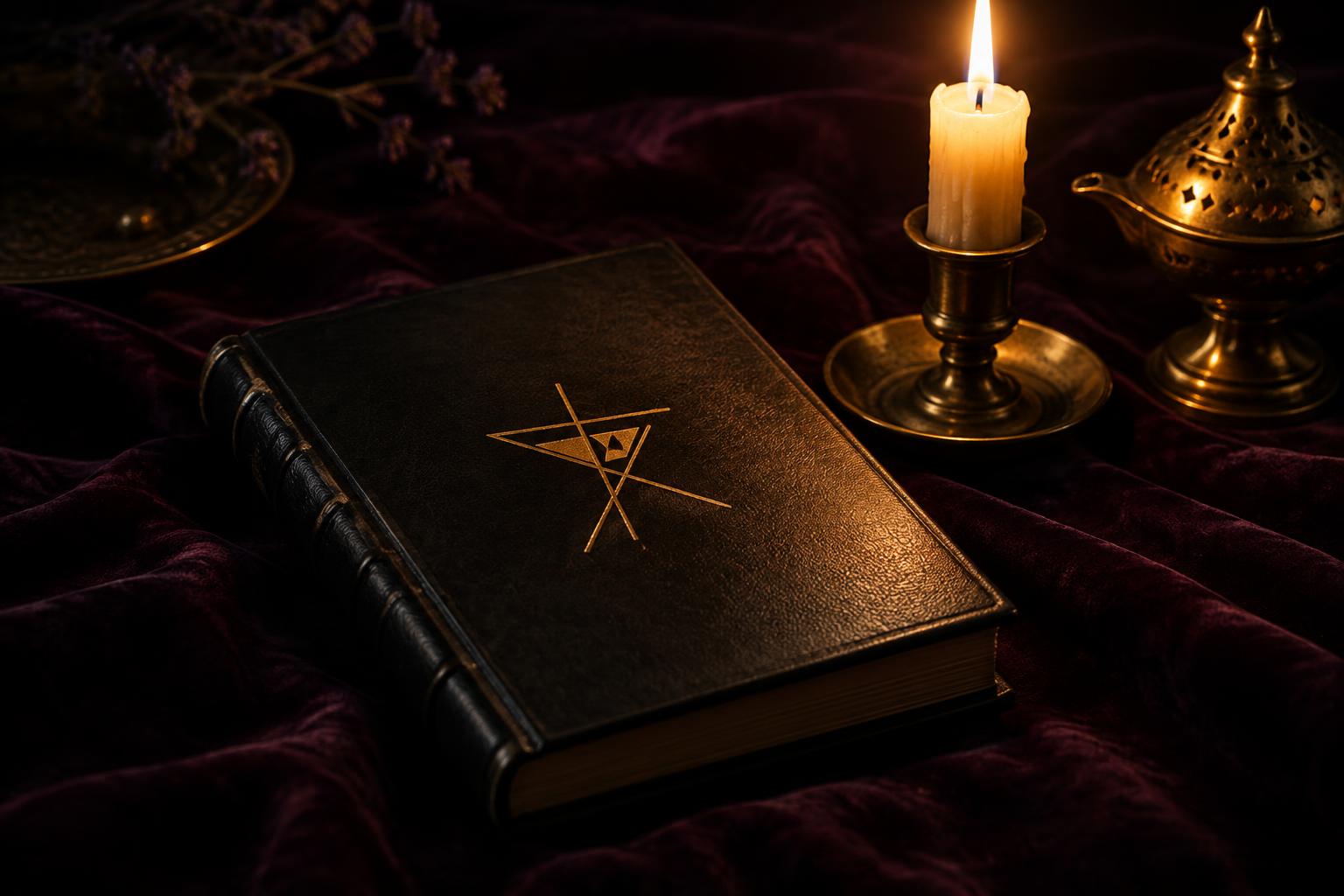
A black leather book with a single gold mark on its cover, on dark velvet beside a candle

The classical edition · Draft for review · 2026

The Rites of One

Built on the classical grimoire tradition — the Key of Solomon, the Abramelin material, the Sixth and Seventh Books of Moses, and the works attributed to Albertus Magnus — with the shape of a conjuration, the words said aloud, the names, the seals, the squares, and the warnings that belong with every working.

By Miguel Harvey · Published by The Furthering Institute · Draft, not the live edition

This edition goes back to the old houses and works from them: twelve instruments, the preparation of the operator in nine parts, the timing by hour, day, planet and moon, the full table of the seventy-two names with an office written for each, sixteen works given in full with their preparations, their words, the names they address, their warnings and their marks, eight plates of squares and seals, and eight appendices of tables. It is written to be worked rather than admired, and it prints as a book.

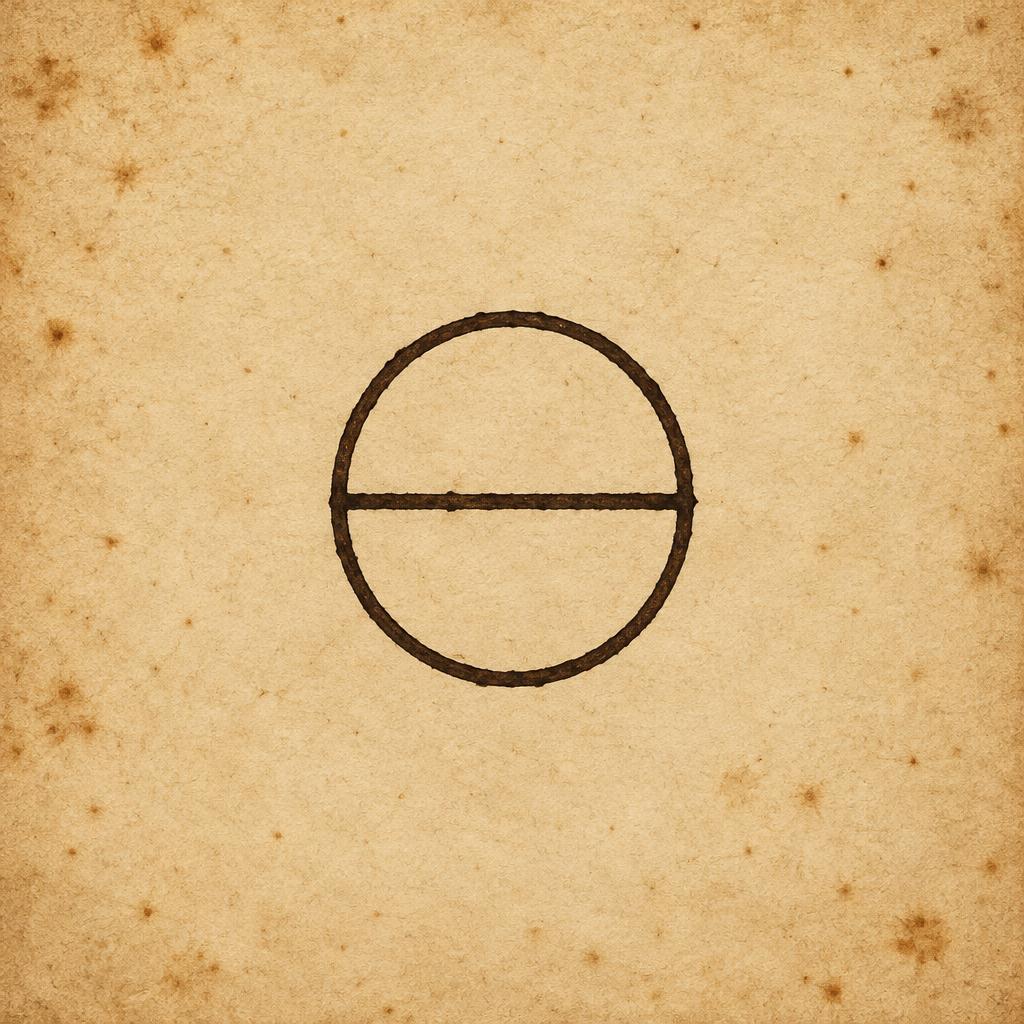
A mark is not a lever. It is a place to put your attention, and a way of knowing later that you put it there.

What changed in this edition

A note on the sources

The first edition was written new from the beginning and deliberately kept the older working books at arm’s length. This edition does the opposite. It goes back to the four houses and builds from them: the shape of a work as the old books set it out, the preparation of the operator, the instruments and how each is kept, the timing by hour and day and planet and moon, the address of a name said aloud once, the squares and the seals as plates, and the warning that belongs with every working.

What is drawn from the old houses. The Key of Solomon, the Book of the Sacred Magic of Abramelin the Mage, the Sixth and Seventh Books of Moses, and the works attributed to Albertus Magnus, including the Book of Black and White Magic and the Egyptian Secrets, are all long out of copyright, and their formulas, their shape and their manner are worked with directly here: the circle and the way in and out of it, the washing and the fast, the hour chosen and written down, the rod and the iron, the name spoken once, the square written rather than said, the seal set at the foot of a page, and the closing done as carefully as the opening.

The hard limit, stated plainly. Three of the works asked for are still under copyright, and nothing has been taken from any of them: not a passage, not a table of names, not a sigil. Those are the Necronomicon attributed to Simon, the Gallery of Magick books, and The Great Book of Magickal Practices. They are met here as inspiration rather than as source. Everything this book owes to them, it owes in the same way it owes the tradition itself: new marks drawn for this edition, new words written for this edition, and new definitions written for every name and every square.

The seventy-two names. The seventy-two three-letter names are an old tradition — set out as a table by writers of the sixteenth and seventeenth centuries, and used in working books ever since. The names themselves are centuries old and belong to nobody. The offices in this edition — what each name is addressed for, how its mark is drawn, how it is charged, and where in this system it is used — are written new for this book. They are the institute’s own reading and not a transcription of anybody else’s, and a student who wants the older readings should go to the older books.

What this edition still does not claim. That a mark, a name or an hour produces a particular result in the physical world. The method, the hour and the record are what is offered, and they are more than most people have. Every working in this book carries a warning with it, and the warnings are as much a part of the system as the marks are — a book of workings without them is not the classical tradition, it is a book of half of it.

The Rites of One · By Miguel Harvey

Contents

  1. IAn introduction to magick and mystical practiceWhat this book means by magick, the four houses it draws its manner from, and what it refuses to claim.
  2. IIThe principles and the theoryTwelve working assumptions, and the reasoning that holds them together.
  3. IIIThe preparation of the operatorNine things done before any working in this book is begun.
  4. IVThe tools, materials and implementsTwelve instruments, all of them ordinary, none of them bought for show.
  5. VThe timing: the hours, the days, the planets and the moonWhen a working is begun, how long it is kept, and when it is closed.
  6. VIThe names, the squares and the sealsHow a name is used, how a square is built, how a seal is set, and the table of the seventy-two.
  7. VIThe table of the seventy-twoSeventy-two names, each with the office written for it in this edition.
  8. VIIThe sixteen worksEach in full: preparation, timing, materials, the names addressed, the words, the steps, the warning, and the mark with its definition.
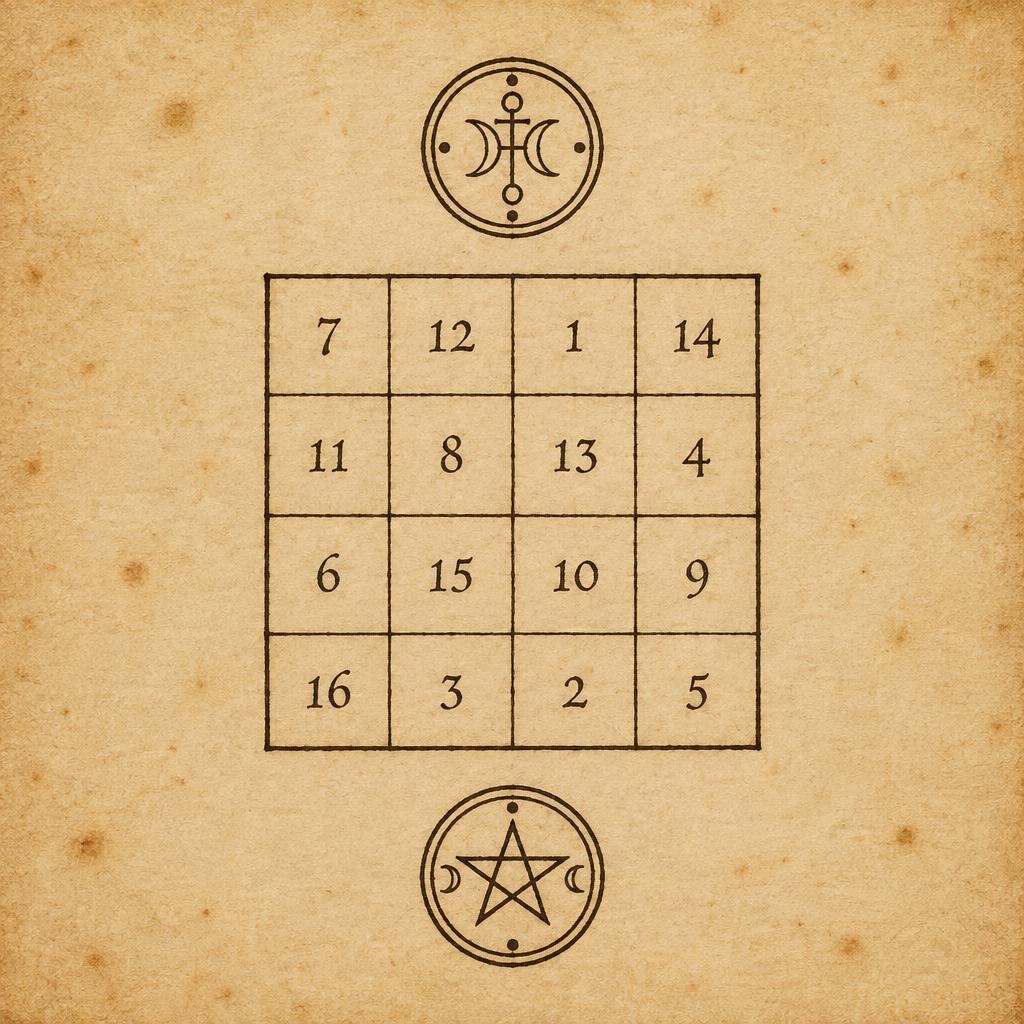
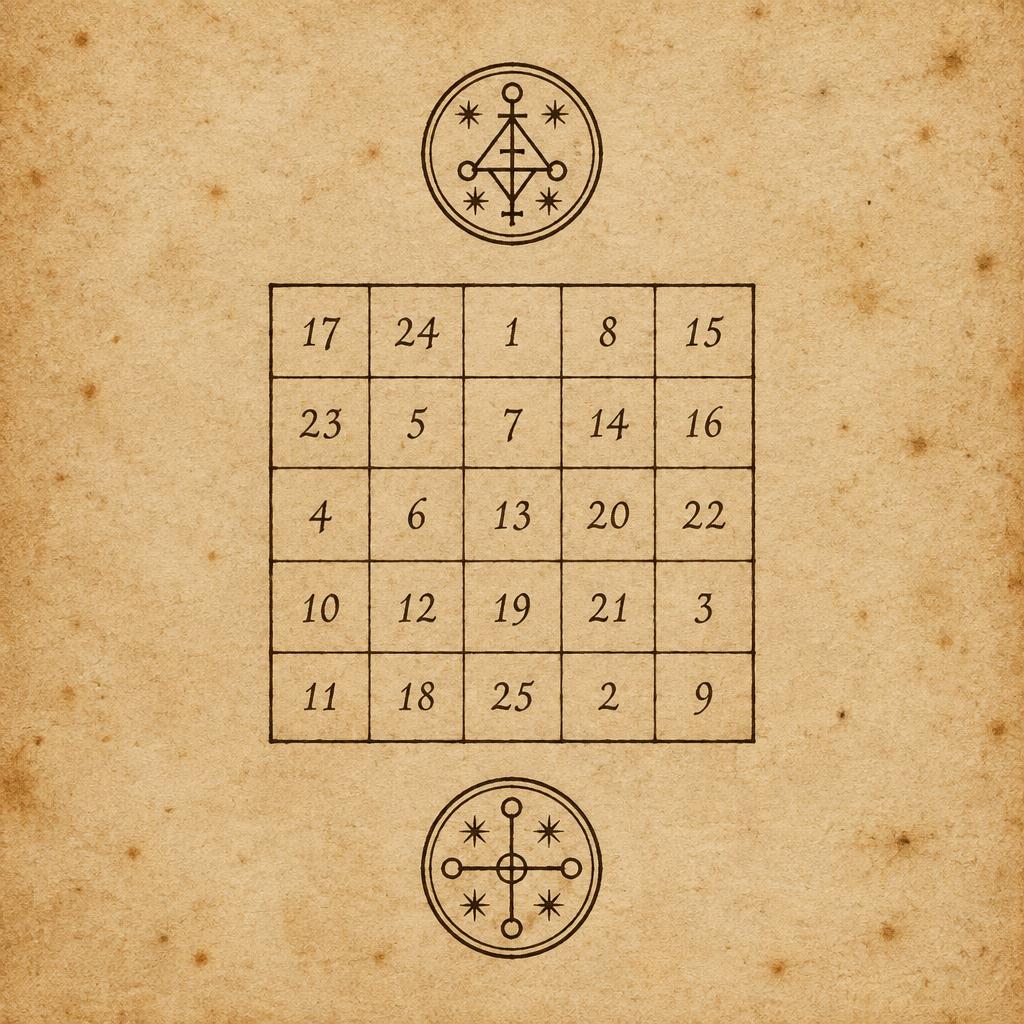
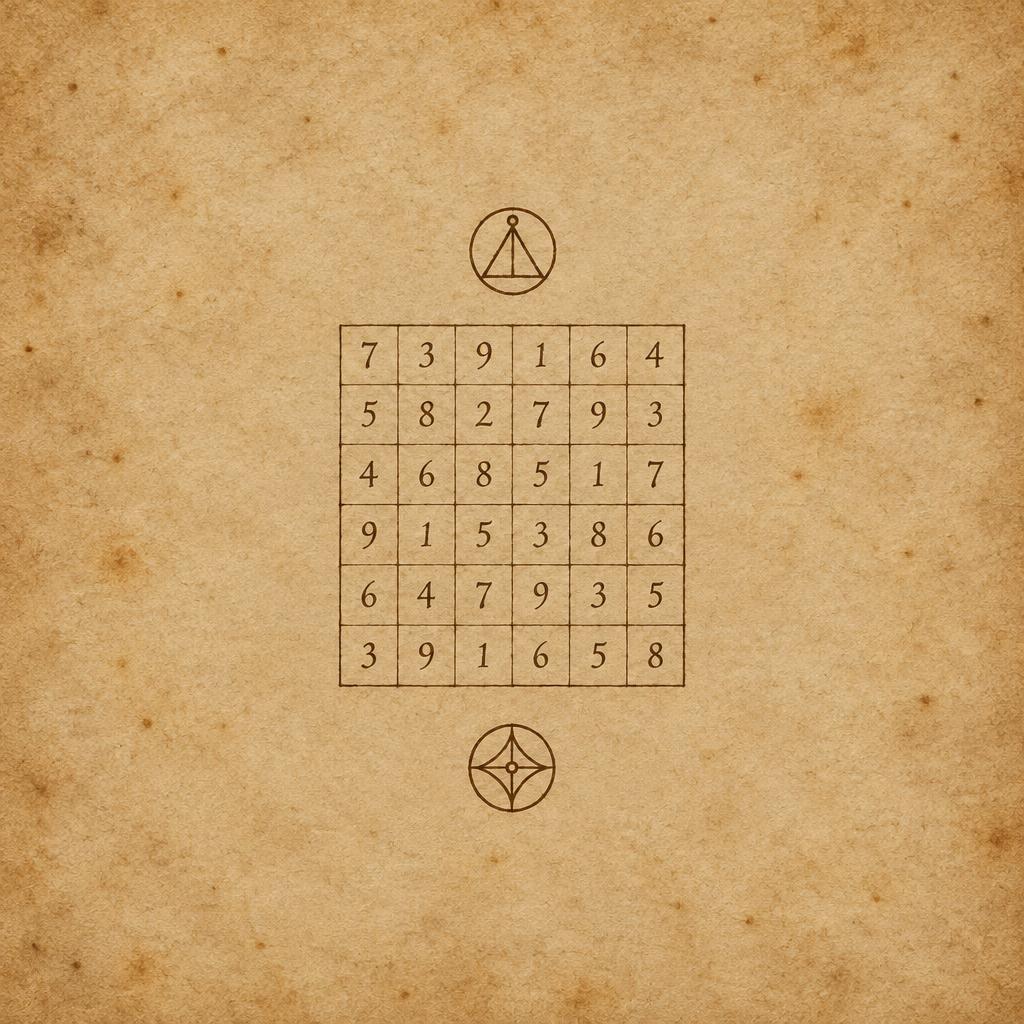
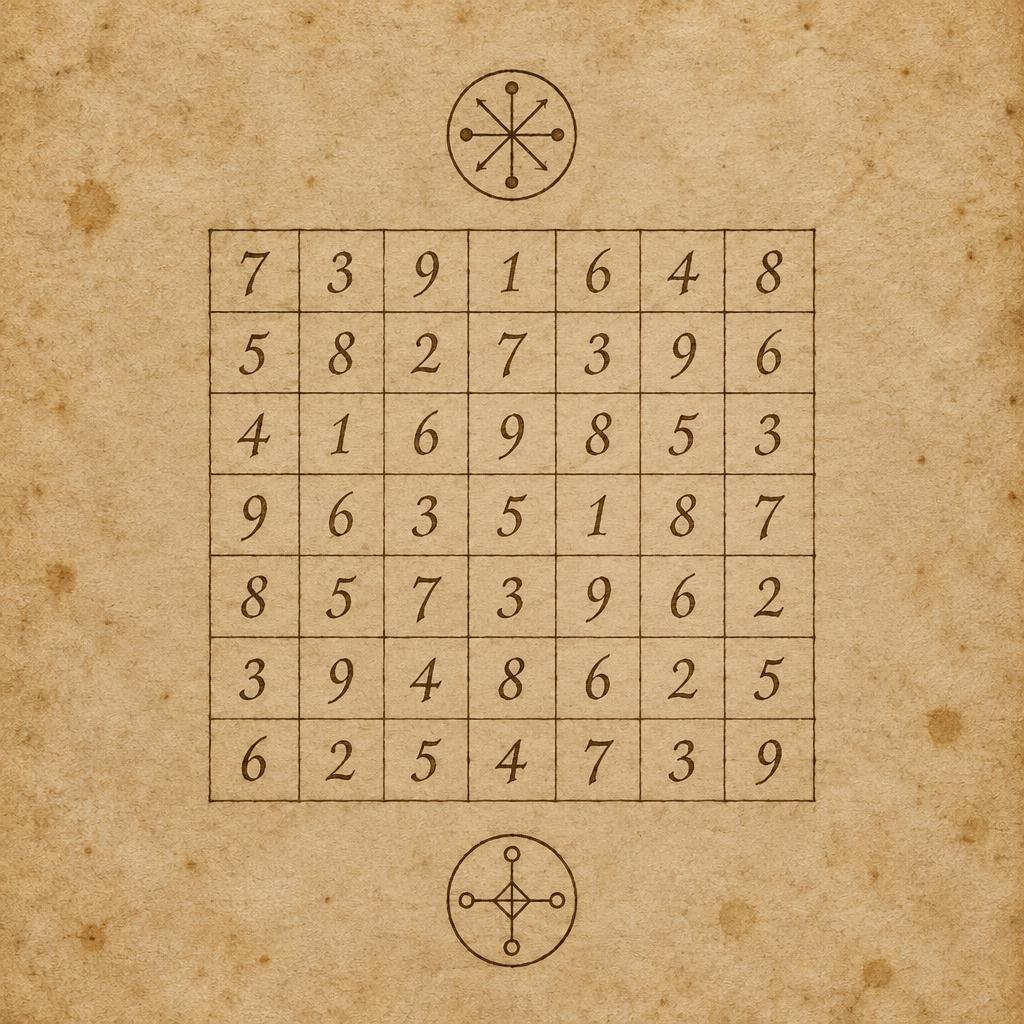
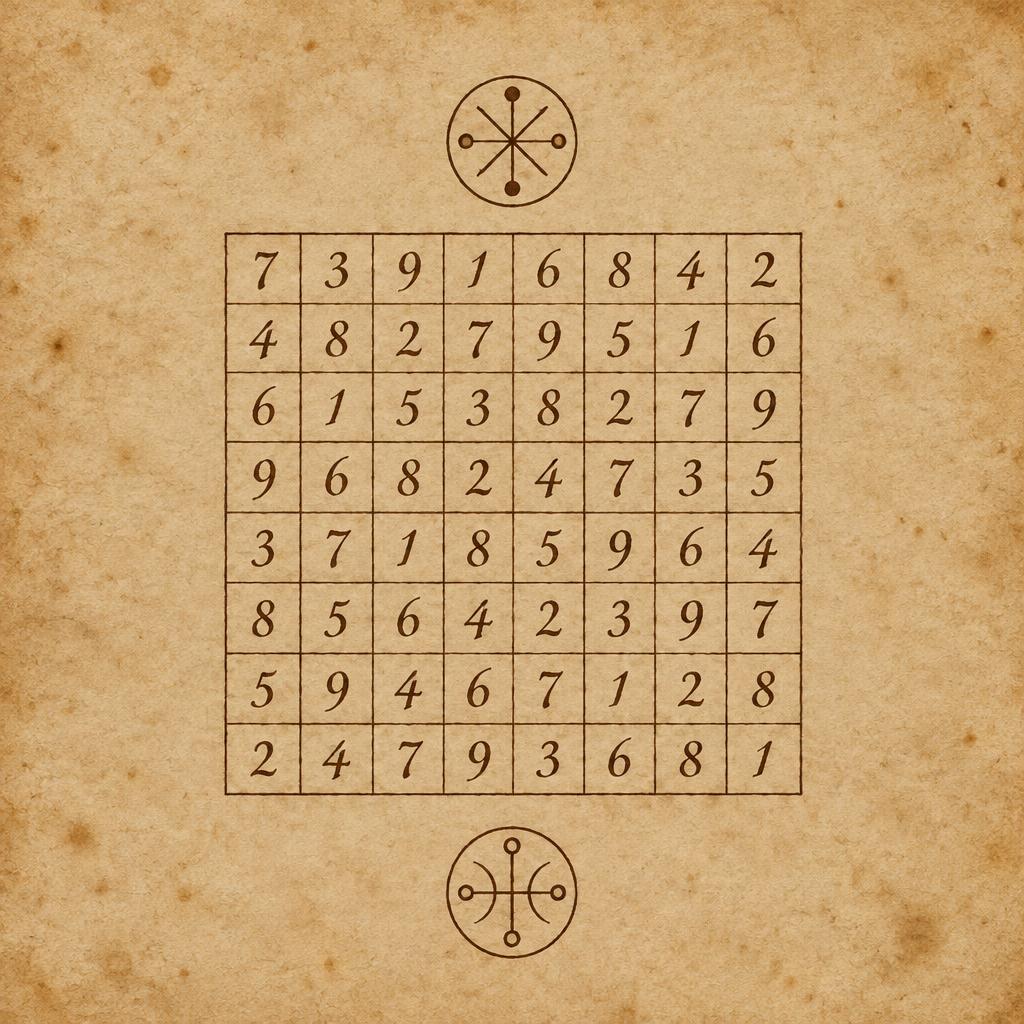
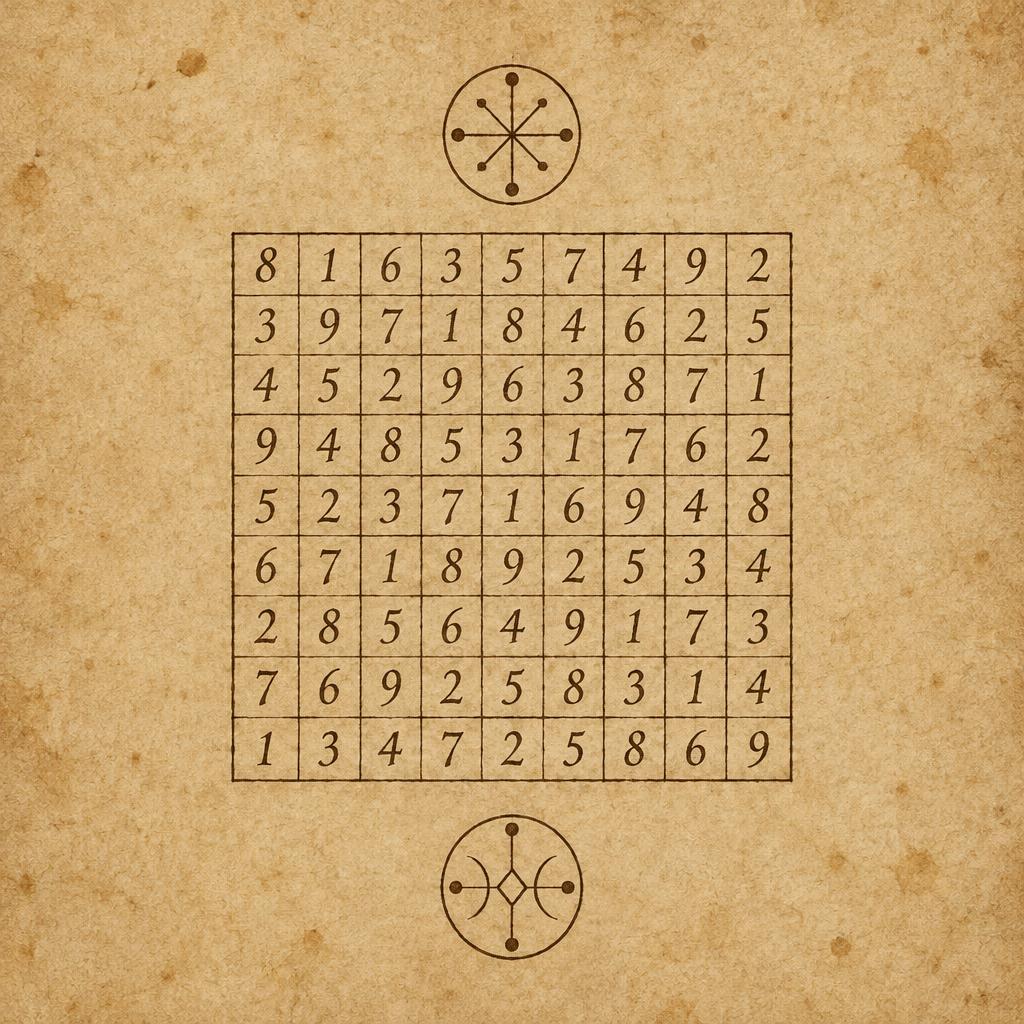
  9. VIIIThe squares and the sealsSix magickal squares and two seals, given as plates with their definitions.
  10. IXAppendices and reference tablesThe hour, the moon, the days, the plants, the stones, the ledger, the works and the marks.

The works

Sixteen marks

  1. IThe Consecration of the Tools
  2. IIThe Well of Quiet Water
  3. IIIThe Ledger of the Year
  4. IVThe Iron Line
  5. VThe Nine Days of Turning
  6. VIThe Sleeping Threshold
  7. VIIThe Lamp Kept Against the Dark
  8. VIIIThe Striking Out
  9. IXThe Two Triangles Undone
  10. XThe Hand Laid Over
  11. XIThe Road of the Increase
  12. XIIThe Cup Held Open
  13. XIIIThe Knot That Has No Entry
  14. XIVThe Centre and the Line Out
  15. XVThe Crescent of the Kept Nights
  16. XVIThe Returning Spiral

Read the first six chapters before you read the works. A reader who begins at the marks will find that nothing holds together — which is the correct experience, and a useful one. The first work is the consecration, and it is the one that makes the other fifteen possible.

The name table

The table of the seventy-two

Seventy-two names, each built from three letters, given here in the conventional transliteration. The office of each — what it is addressed for, how its mark is drawn, how it is charged, and where in this system it is used — is written for this edition. A name is written in the ledger and said aloud once. It is not repeated.

A practitioner working the sixteen works will use perhaps twenty of these in a year. The rest are here so that the table is whole, and so that a member extending the system in their own hand has the full field to draw from.

  1. 01VHV

    Vehuiah

    Governs the opening of a work, and the first hour of any term.

    Drawn as a rising line from left to right, its first turn taken at the top of the page.

    Charged over the lamp, before it is lit, at the opening hour.

    Used spoken once at the opening of every work in this book.

  2. 02YLY

    Jeliel

    Governs the holding of a term once it has been set.

    Drawn as two uprights with one line laid across them, drawn downward.

    Charged in the dish of salt, at the notch of the threshold.

    Used at the renewal of a term, and where a term is being tested.

  3. 03STL

    Sitael

    Governs shelter, and the quieting of a house that will not settle.

    Drawn as a roof line over a single upright, in one pass and without lifting the hand.

    Charged on the first evening a house is entered, over the threshold salt.

    Used for a home that has been disturbed, or a room that will not hold an hour.

  4. 04ELM

    Elemiah

    Governs the removal of an obstruction that is nobody’s fault.

    Drawn as a straight line with one clean break at its middle.

    Charged over the slip of paper that names the matter, folded once.

    Used where a matter is stalled and no person is to be blamed for it.

  5. 05MHS

    Mahasiah

    Governs agreement between two people who are not speaking.

    Drawn as two short curves facing one another, joined at the base.

    Charged between the two vessels, at the ninth evening.

    Used at the work of agreement, where the silence has lasted a season.

  6. 06LLL

    Lelahel

    Governs light kept for another person, at a distance.

    Drawn as three short rays above a single point, the middle one longest.

    Charged over a second lamp, lit for the absent one and set beside the first.

    Used for a person travelling, or ill, or away from home.

  7. 07AKA

    Achaiah

    Governs patience in a long work.

    Drawn as a slow curve that turns back on itself once and then goes on.

    Charged in the ledger, on the page of the working, at the third keeping.

    Used where a term is being kept past the point of interest.

  8. 08KHT

    Cahetel

    Governs the keeping of a promise made aloud.

    Drawn as a closed shape with one small opening at the lower right.

    Charged said over the open hand, and not written.

    Used where the practitioner’s own word is the whole of the matter.

  9. 09HZI

    Haziel

    Governs the favour of those who have gone before — a teacher, a parent, a house.

    Drawn as a line that comes down and stops, with one small dot beneath it.

    Charged in the dish of salt set out for the address.

    Used at the address of the dead, before the name is said aloud.

  10. 10ALD

    Aladiah

    Governs the relief of a matter that has been carried too long.

    Drawn as a long line that lifts at its end, drawn from the left.

    Charged over water, at the closing of the hour.

    Used where a working has been kept past its season and must be let down.

  11. 11LVI

    Lauviah

    Governs the strengthening of a work already begun.

    Drawn as a single upright with one bar across it, drawn upward.

    Charged on the cloth, at the middle keeping of a term.

    Used at the third hour of any month-long work.

  12. 12HHI

    Hahaiah

    Governs the concealment of a matter from the wrong ear.

    Drawn as two short curves closing over a dot.

    Charged said at the threshold, and not written.

    Used before a conversation that must not be repeated.

  13. 13IZL

    Iezalel

    Governs the reconciliation of two who have quarrelled.

    Drawn as two lines that meet and cross once, and are not separated again.

    Charged over the two vessels, at the closing.

    Used at the ninth evening, where the quarrel was actually spoken of.

  14. 14MBH

    Mebahel

    Governs the defence of a place against a matter that has been named.

    Drawn as a short line laid across a longer one, near its middle.

    Charged with the iron, at the threshold, facing out.

    Used where a specific harm has been named and must be met rather than ignored.

  15. 15HRI

    Hariel

    Governs the keeping of a garden, a field, or a growing thing.

    Drawn as a line rising with three small leaves set off it.

    Charged out of doors, at the new moon, with the hand on the ground.

    Used at the setting of the year’s course of stones, for ground rather than a house.

  16. 16HKM

    Hakamiah

    Governs judgement held steady — a decision that must not be hurried.

    Drawn as two uprights of equal height with one bar between them.

    Charged over the ledger, before the matter is written into it.

    Used where a practitioner must decide and cannot.

  17. 17LVI

    Lauviah the Second

    Governs the second keeping of a work that has already been renewed once.

    Drawn as the eleventh mark, with a second bar drawn beneath the first.

    Charged at the renewal, on the page of the first keeping.

    Used where a term is renewed a second time and the first mark no longer serves.

  18. 18KLI

    Caliel

    Governs the answer to a plain question plainly put.

    Drawn as a single straight line, drawn slowly and not corrected.

    Charged over the question written on the slip, before it is folded.

    Used at the work of looking, before the water or the mirror is looked into.

  19. 19LVI

    Leuviah

    Governs the return of something lost or long mislaid.

    Drawn as a curve that comes back to the point it started from.

    Charged said three mornings running, standing at the door.

    Used for a document, a key, or a record that has gone astray.

  20. 20PHL

    Pahaliah

    Governs the turning of a habit that has held too long.

    Drawn as a line that turns sharply once and then continues.

    Charged in the ledger, at the first and the last keeping of the term.

    Used at the binding, where the matter bound is the practitioner’s own.

  21. 21NLK

    Nelchael

    Governs the learning of a hard thing — a language, a craft, an instrument.

    Drawn as three short lines of different lengths, set side by side.

    Charged over the book or the tool, at the hour of study.

    Used at the opening of a long study, and at its renewal each season.

  22. 22IYI

    Ieiaiel

    Governs the protection of a journey, by water or by road.

    Drawn as a line with one small wave beneath it.

    Charged at the door, with the hand laid on the lintel.

    Used before a departure, once, and not again on the road.

  23. 23MLH

    Melahel

    Governs the healing of a place rather than a person — a room, a shop, a house.

    Drawn as a square with one side left open.

    Charged in salt, at the four corners, walking the same route twice.

    Used at the striking out, where the place has been the scene of a difficulty.

  24. 24HHV

    Haheuiah

    Governs the calming of fear in the night.

    Drawn as a crescent with one dot beneath its lower horn.

    Charged over the pillow, before sleep, with the lamp still lit.

    Used at the month of kept nights, on a night of bad dreams.

  25. 25NTH

    Nith-Haiah

    Governs the address of a presence that a place is known for.

    Drawn as a doorway with one line laid above it.

    Charged at the threshold, facing in.

    Used at the open hand over water, where the place matters more than a name.

  26. 26HAA

    Haaiah

    Governs the recovery of a matter that was put down and forgotten.

    Drawn as a line that stops, with a second line beginning where it stopped.

    Charged in the ledger, on a fresh page, with the old page open beside it.

    Used where a working is taken up again after a lapse of months.

  27. 27IRT

    Ierathel

    Governs the removal of the practitioner’s own anger from a matter.

    Drawn as a line drawn from the centre outward, away from the reader.

    Charged at the closing, with the back turned to the table.

    Used before any work of agreement, where the practitioner is angry.

  28. 28SHH

    Seehiah

    Governs the long keeping of a difficult hour.

    Drawn as a short line, drawn small, repeated seven times in a row.

    Charged at each of the seven keepings of the first week.

    Used at the lamp kept against the dark, on the seventh night.

  29. 29RII

    Reiiel

    Governs the opening of a way closed by no person — a rule, a season, a delay.

    Drawn as a bar with one short line rising from its middle.

    Charged over the iron, held across the palms.

    Used where a way has stopped and there is no one to ask.

  30. 30OML

    Omael

    Governs the growth of a thing that grows slowly — a herd, a trade, a reputation.

    Drawn as a line that thickens along its length, drawn left to right.

    Charged in the ledger, once a month, at the same hour.

    Used at the work of increase, where the count is long.

  31. 31LKB

    Lecabel

    Governs the honesty of an account.

    Drawn as two short parallel lines with a third laid across them.

    Charged over the ledger, at the closing of a page.

    Used before the page is written up, where the practitioner is tempted to soften a line.

  32. 32VSR

    Vasariah

    Governs the keeping of a matter confidential.

    Drawn as a closed shape with no opening at all.

    Charged said only, never written.

    Used where a working is done for another person and must not be spoken of.

  33. 33IHV

    Iehuiah

    Governs the exposure of a matter hidden to the practitioner’s harm.

    Drawn as a line drawn back through a closed shape.

    Charged with the iron laid over the ledger.

    Used where a matter must be known rather than merely defended against.

  34. 34LHH

    Lehahiah

    Governs the closing of a season that has ended badly.

    Drawn as a spiral turned the other way, inward.

    Charged at the last keeping, over the page.

    Used where a term is closed with nothing to show and must not be carried further.

  35. 35KVK

    Chavakiah

    Governs the reconciliation of a household divided.

    Drawn as two lines that come together and stay together.

    Charged over the two vessels, at the ninth evening.

    Used at the work of agreement, where the two parties live under one roof.

  36. 36MND

    Menadel

    Governs the holding of a position that is under pressure.

    Drawn as a single upright with one bar laid beneath it.

    Charged at the threshold, standing on the inside.

    Used where the practitioner’s own place is being tested.

  37. 37ANI

    Aniel

    Governs the turning aside of a matter that is not the practitioner’s to meet.

    Drawn as a line that approaches and then turns away.

    Charged said at the door, with the hand resting on the iron.

    Used where a difficulty belongs to someone else and must be left with them.

  38. 38HAA

    Haamiah

    Governs the finding of a way where no way is visible.

    Drawn as a line that breaks and resumes on the other side of the break.

    Charged over water, in the first hour after sunrise.

    Used where a matter must be met and no means of meeting it can be seen.

  39. 39RHL

    Rehael

    Governs the healing of the practitioner’s own body after a long season.

    Drawn as a curve that closes on itself.

    Charged over the cup, at the closing of a season.

    Used at the returning spiral, for the practitioner alone.

  40. 40IZL

    Ieiazel

    Governs the relief of a matter that has been grieved over.

    Drawn as a line that falls and then levels.

    Charged over the closed page of the working.

    Used where a working has failed and the practitioner must put it down.

  41. 41HHH

    Hahahel

    Governs the keeping of a fast, a discipline, or an abstinence.

    Drawn as three short bars, evenly spaced, in a row.

    Charged each morning of the discipline, on the same page of the ledger.

    Used at the preparation of the operator, where a fast is being kept.

  42. 42MIK

    Mikael

    Governs the defence of a person against a harm already in motion.

    Drawn as a line drawn downward and ending in a bar.

    Charged over the iron, held upright in the right hand.

    Used at the lamp kept against the dark, on the night of a named danger.

  43. 43VVL

    Veuliah

    Governs the increase of a thing already in hand.

    Drawn as a line with two short lines rising from it.

    Charged over the ledger, at the count.

    Used at the work of increase, in the fourth week.

  44. 44YLH

    Yelahiah

    Governs the settlement of a matter that has been fought over.

    Drawn as a line drawn through the middle of a shape and out the far side.

    Charged over the dish of salt, at the notch.

    Used where a dispute is to be ended rather than won.

  45. 45SAL

    Sealiah

    Governs the rising of a matter that has been pressed down.

    Drawn as a line that lifts and keeps lifting.

    Charged in the first hour after sunrise, over the sweepings.

    Used at the work of uncrossing, at the closing.

  46. 46ARI

    Ariel

    Governs the seeing of a thing as it actually is.

    Drawn as a single small circle with nothing drawn inside it.

    Charged before the water or the mirror is looked into, once.

    Used at the work of looking, before the hour begins.

  47. 47ASL

    Asaliah

    Governs the patience of a long illness, for the one who keeps the hour beside it.

    Drawn as a slow curve with one dot at its end.

    Charged over the cup of the person who is ill.

    Used at the hand laid over, for the keeper rather than the patient.

  48. 48MIH

    Mihael

    Governs the love of a household kept steady.

    Drawn as two lines that rise together and never cross.

    Charged over the table of the house, at the new moon.

    Used at the course of stones, at the yearly renewal.

  49. 49VHV

    Vehuel

    Governs the favour of a person whose favour cannot be commanded.

    Drawn as a line that approaches and stops short of what it approaches.

    Charged over the folded paper of the three keys.

    Used at the work of the small doors, on the third morning.

  50. 50DNI

    Daniel

    Governs the honest reading of the practitioner’s own record.

    Drawn as two lines ruled side by side, of exactly equal length.

    Charged over the ledger, at the closing of a year.

    Used at the ledger of the year, before the page is closed.

  51. 51HHH

    Hahasiah

    Governs the relief of a hidden and long-standing difficulty.

    Drawn as a closed shape with one line drawn through it.

    Charged in the dark of the moon, over the salt.

    Used at the work of uncrossing, at the opening.

  52. 52IMM

    Imamiah

    Governs the protection of a person who cannot protect themselves.

    Drawn as a bar above a short line, drawn small.

    Charged said at the door, facing out, and not written.

    Used for a child, an elder, or one who is away and cannot keep their own hour.

  53. 53NNA

    Nanael

    Governs the clarity of a practitioner who is confused by too much reading.

    Drawn as three lines converging to a single point.

    Charged over the closed book, with the hand flat upon it.

    Used before the ledger is written, where the practitioner is muddled.

  54. 54NTH

    Nithael

    Governs the keeping of a room against a season of difficulty.

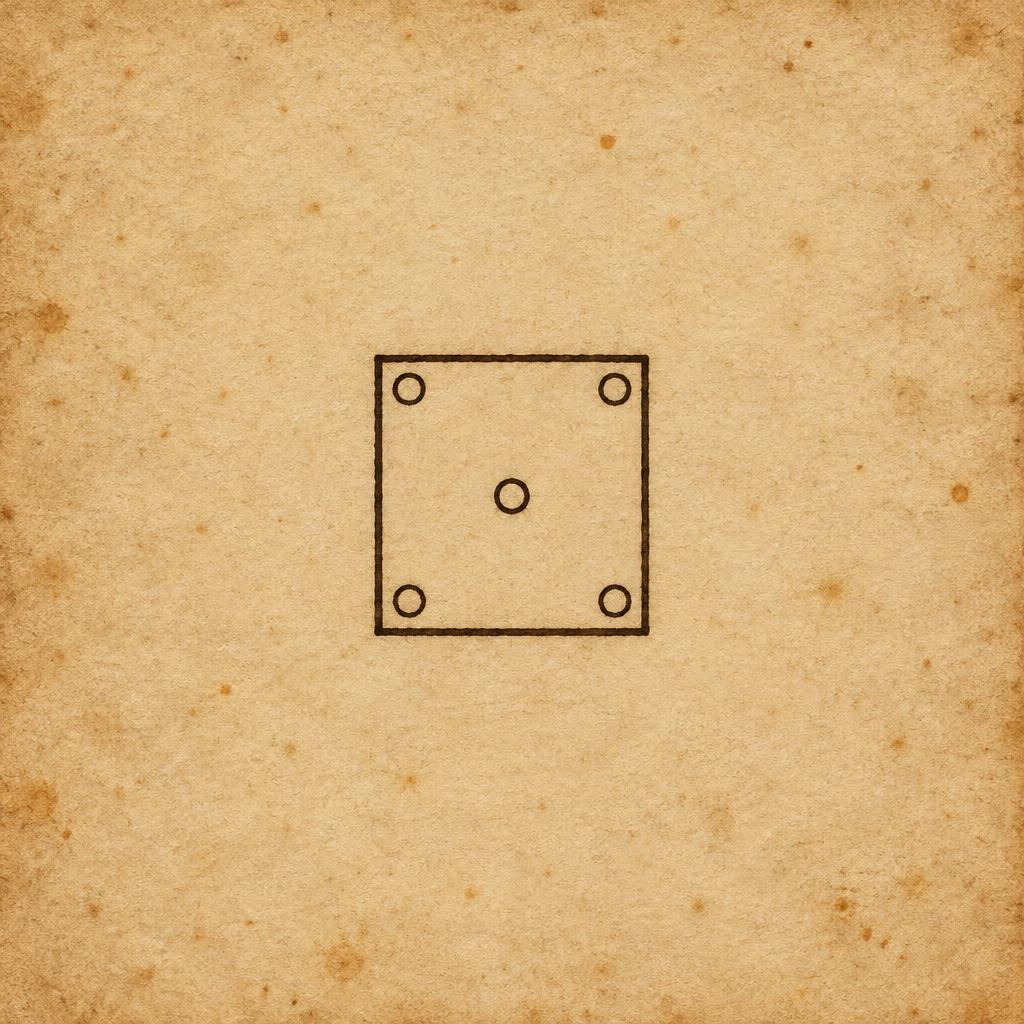
    Drawn as a square with one dot at each of its four corners.

    Charged in the salt, at the four corners, in the order they were first named.

    Used at the course of stones, in a hard year.

  55. 55MBH

    Mebahiah

    Governs the speaking of a true word at the right hour.

    Drawn as a short line with one small circle at its end.

    Charged said only at the hour, and written down afterwards.

    Used before a conversation that matters, and never during it.

  56. 56POI

    Poyel

    Governs the increase of a matter that is small and must not be lost.

    Drawn as a single small dot with one short line rising from it.

    Charged over the ledger, at the writing of the first line.

    Used at the opening of a work of increase, where there is very little to count.

  57. 57NMM

    Nemamiah

    Governs the standing of a practitioner in a place that is not their own.

    Drawn as an upright with one short bar laid across its foot.

    Charged at the threshold of the place, on entering, once.

    Used on arrival at a strange place, and not again while there.

  58. 58IYL

    Ieialel

    Governs the breaking of a long run of difficulty.

    Drawn as a line drawn across three short lines.

    Charged with the iron, at the closing of the month.

    Used at the work of uncrossing, on the closing evening.

  59. 59HRH

    Harahel

    Governs the care of a library, a record, or a collection.

    Drawn as three short parallel bars, stacked one above the other.

    Charged over the shelf, at the new moon.

    Used where books, ledgers or records are the practitioner’s charge.

  60. 60MZR

    Mizrael

    Governs the relief of a person who has been treated unjustly.

    Drawn as a line drawn back to the place it began.

    Charged over the slip that names the matter, with no person named on it.

    Used at the work of uncrossing, where no person is to be named.

  61. 61VMB

    Umabel

    Governs the friendship of a person long absent.

    Drawn as two short lines that come near to touching and do not.

    Charged over the cup, at the hour of sleep.

    Used where a friendship has gone quiet and is to be renewed.

  62. 62IHH

    Iahhel

    Governs the keeping of a working that must not be seen.

    Drawn as a closed shape drawn small and set at the outer margin of the page.

    Charged in the ledger, at the margin, not in the body of the page.

    Used at the work of concealment, at the opening.

  63. 63ANV

    Anauel

    Governs the turning of a trade that has gone quiet.

    Drawn as a line that dips and then rises.

    Charged over the ledger of the trade, in the first hour after sunrise.

    Used at the work of increase, for a trade rather than a person.

  64. 64MHI

    Mehiel

    Governs the keeping of a word spoken over another person’s work.

    Drawn as a line drawn beside a closed shape, never through it.

    Charged said, and never written.

    Used where a practitioner blesses another’s work and must not interfere in it.

  65. 65DMB

    Damabiah

    Governs the clearing of a house of a long-standing disorder.

    Drawn as a line drawn from the centre outward on both sides at once.

    Charged at the striking out, over the sweepings, before they are carried out.

    Used where a house has not been cleared in a year or more.

  66. 66MNK

    Manakel

    Governs the quieting of a place where a death has occurred.

    Drawn as a low line with one short bar laid above it.

    Charged in salt, at the threshold, left standing for one day.

    Used at the striking out, after a death, and not before the ninth day.

  67. 67AYA

    Eyael

    Governs the consolation of a person in grief.

    Drawn as a curve that closes gently at the top.

    Charged said at the door, and not written.

    Used at the open hand over water, where the dead are named.

  68. 68HBV

    Habuhiah

    Governs the healing of a long and slow complaint.

    Drawn as a line drawn with three small breaks in it.

    Charged over the cup, on each of the three days in turn.

    Used at the hand laid over, on the second and the third day.

  69. 69RKL

    Rochel

    Governs the return of a thing taken or withheld.

    Drawn as a line drawn back toward the reader.

    Charged over the ledger, with the iron laid across the page.

    Used where a debt, a fee or a document is owed and must be asked for.

  70. 70IBM

    Jabamiah

    Governs the opening of a work long prepared and never begun.

    Drawn as a single line drawn from the foot of the page upward.

    Charged over the cloth, before the first hour of the term.

    Used at the setting of a term, where the preparation has run long.

  71. 71HYY

    Haiaiel

    Governs the keeping of the practitioner’s own counsel.

    Drawn as a closed shape with one dot set inside it.

    Charged said only, before the hour, standing.

    Used at every working, before the first word is spoken.

  72. 72MVM

    Mumiah

    Governs the closing of the last hour of a season, and the silence after it.

    Drawn as a line drawn to the edge of the page and off it, left unfinished.

    Charged over the closed ledger, with the lamp already out.

    Used at the returning spiral, after the closing words are said.

A note on the offices. The names are old and the offices are new. Where an older book gives an office for a name that differs from the one above, the older book is not wrong and this one is not correcting it — this is the office the name holds in this system, and a system is a set of arrangements, not a claim about the world. A member who finds an office that reads badly for their own work should say so and the table will be revised; the book belongs to the institute and the institute belongs to its members.

The works

The sixteen works

Each work is given in full: what it is for, what is done before the first hour, when it is begun and closed, what stands on the table, the names it addresses, the working itself written out step by step, the words to be said, the warning that belongs with it, and the mark with its definition. A work is begun, kept for its season, and closed — never left standing, and never two at once.

The plates

The magickal squares and the seals

A square is a ruled grid of numbers in which every row, every column and both diagonals sum alike. A practitioner builds one by hand rather than copying it, and the building is worth an evening. The plates below are given as models and as examples of the finished article, each with its own definition.

Appendices

Reference tables

Everything the working chapters refer to, gathered in one place so that a practitioner with the book open on the table does not have to turn back through it.

Colophon

On the making of this edition

The Rites of One, by Miguel Harvey — the classical edition, draft for review

Author. Miguel Harvey.

Published by. The Furthering Institute, for the members’ library.

Title. The Rites of One.

Edition. The classical edition, draft for review, 2026.

Sources drawn on directly. The Key of Solomon; the Book of the Sacred Magic of Abramelin the Mage; the Sixth and Seventh Books of Moses; and the works attributed to Albertus Magnus, including the Book of Black and White Magic and the Egyptian Secrets. All of these are long out of copyright, and their formulas, their order of working, their manner and their warnings are worked with in these pages. The book is not a transcription of any of them and does not reprint any of their text: the marks are new, the words are new, the offices of the seventy-two names are new, the arrangement is the institute’s own, and the practitioner who wants the old books at source should buy the old books.

Sources deliberately not used. Three works remain in copyright and nothing has been taken from any of them — no passage, no table of names, no sigil, no word of power. They are the Necronomicon attributed to Simon, the Gallery of Magick books, and The Great Book of Magickal Practices by Delaurence. They are met as inspiration and not as source, which is why every mark in this edition was drawn for it, every name-office written for it, and every word composed for it.

The marks. Sixteen works, sixteen marks, each drawn for its work and defined in full — what it is for, what it governs, how it is drawn or charged, and how it is used and retired. The plates are given as models; the method of drawing a new mark in the practitioner’s own hand is set out in Chapter VI so that the system may be extended and not merely used.

What it does not claim. The institute does not teach, and this book does not claim, that a mark, a name or an hour produces a particular result in the physical world. What the practitioner holds is the method, the hour and the record. That is the whole of what is promised here, and every working in this book carries its warning with it.

Here ends the draft of the classical edition. Keep the hour, keep the name, keep the mark, keep the ledger, and close as carefully as you open.